Part 1
요약·해설
지원표 14행, 공식 이미지와 LED/button sample·DTS 경로를 보존했습니다.
nRF52832 M4F
Bluetooth LE
32.768k · 32M
2 LED · 1 button
Part 2
접을 수 있는 영어 원문 전체
영어 원문 전체 펼치기
A8ED7055234E4DB5CC985AA6C4A9092804691577963F7DCD728A419F03F81D77
.. _we_proteus2ev_nrf52832:

Würth Elektronik Proteus-II-EV
##############################

Overview
********

The Proteus-II-EV hardware provides
support for the Proteus-II radio module that uses the Nordic Semiconductor nRF52832 ARM Cortex-M4F CPU and
the following devices:

* :abbr:`ADC (Analog to Digital Converter)`
* CLOCK
* FLASH
* :abbr:`GPIO (General Purpose Input Output)`
* :abbr:`I2C (Inter-Integrated Circuit)`
* :abbr:`MPU (Memory Protection Unit)`
* :abbr:`NVIC (Nested Vectored Interrupt Controller)`
* :abbr:`PWM (Pulse Width Modulation)`
* RADIO (Bluetooth Low Energy)
* :abbr:`RTC (nRF RTC System Clock)`
* Segger RTT (RTT Console)
* :abbr:`SPI (Serial Peripheral Interface)`
* :abbr:`UART (Universal asynchronous receiver-transmitter)`
* :abbr:`WDT (Watchdog Timer)`

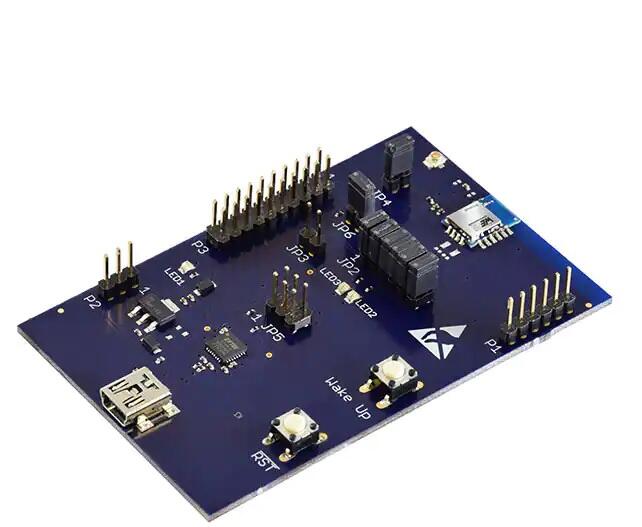
.. figure:: ../../../../../../../boards/we/proteus2ev/doc/img/we_proteus2ev_nrf52832.jpg
     :align: center
     :alt: Proteus-II EV

     Proteus-II-EV (Credit: Würth Elektronik)

More information about the radio module can be found the Würth Elektronik web page https://www.we-online.com/katalog/de/PROTEUS-II .


Hardware
********

Proteus-II radio module provides only the internal oscillators. The frequency of the slow clock
is 32.768 kHz. The frequency of the main clock is 32 MHz.

Supported Features
==================

The we_proteus2ev/nrf52832 board configuration supports the following
hardware features:

+-----------+------------+----------------------+
| Interface | Controller | Driver/Component     |
+===========+============+======================+
| ADC       | on-chip    | adc                  |
+-----------+------------+----------------------+
| CLOCK     | on-chip    | clock_control        |
+-----------+------------+----------------------+
| FLASH     | on-chip    | flash                |
+-----------+------------+----------------------+
| GPIO      | on-chip    | gpio                 |
+-----------+------------+----------------------+
| I2C(M)    | on-chip    | i2c                  |
+-----------+------------+----------------------+
| MPU       | on-chip    | arch/arm             |
+-----------+------------+----------------------+
| NVIC      | on-chip    | arch/arm             |
+-----------+------------+----------------------+
| PWM       | on-chip    | pwm                  |
+-----------+------------+----------------------+
| RADIO     | on-chip    | Bluetooth            |
+-----------+------------+----------------------+
| RTC       | on-chip    | system clock         |
+-----------+------------+----------------------+
| RTT       | Segger     | console              |
+-----------+------------+----------------------+
| SPI(M/S)  | on-chip    | spi                  |
+-----------+------------+----------------------+
| UART      | on-chip    | serial               |
+-----------+------------+----------------------+
| WDT       | on-chip    | watchdog             |
+-----------+------------+----------------------+

Other hardware features are not supported by the Zephyr kernel.

Connections and IOs
===================

LED
---

* LED1 = P0.00
* LED2 = P0.01

Push buttons
------------

* BUTTON1 = SW1 = P0.29


Programming and Debugging
*************************

Applications for the ``we_proteus2ev/nrf52832`` board configuration can be
built, flashed, and debugged in the usual way. See
:ref:`build_an_application` and :ref:`application_run` for more details on
building and running.

Flashing
========

Follow the instructions in the :ref:`nordic_segger` page to install
and configure all the necessary software. Further information can be
found in :ref:`nordic_segger_flashing`. Then build and flash
applications as usual (see :ref:`build_an_application` and
:ref:`application_run` for more details).

Here is an example for the :ref:`hello_world` application.

First, run your favorite terminal program to listen for output.

.. code-block:: console

   $ minicom -D <tty_device> -b 115200

Replace :code:`<tty_device>` with the port where the board Proteus-II-EV
can be found. For example, under Linux, :code:`/dev/ttyACM0`.

Then build and flash the application in the usual way.

.. zephyr-app-commands::
   :zephyr-app: samples/hello_world
   :board: we_proteus2ev/nrf52832
   :goals: build flash

Debugging
=========

Refer to the :ref:`nordic_segger` page to learn about debugging Nordic boards with a
Segger IC.


Testing the LEDs and buttons in the Proteus-II-EV
*************************************************

There are 2 samples that allow you to test that the buttons (switches) and LEDs on
the board are working properly with Zephyr:

.. code-block:: console

   samples/basic/blinky
   samples/basic/button

You can build and flash the examples to make sure Zephyr is running correctly on
your board. The button and LED definitions can be found in
:zephyr_file:`boards/we/proteus2ev/we_proteus2ev_nrf52832.dts`.

References
**********

.. target-notes::

.. _Proteus-II radio module website: https://www.we-online.com/katalog/de/PROTEUS-II
.. _nRF52 DK website: https://www.nordicsemi.com/Software-and-Tools/Development-Kits/nRF52-DK
.. _Nordic Semiconductor Infocenter: https://infocenter.nordicsemi.com
Part 3
한국어 전문 번역
개요
Proteus-II-EV는 Nordic Semiconductor nRF52832 ARM Cortex-M4F CPU 기반 Proteus-II radio module을 지원합니다. ADC, clock, flash, GPIO, I2C, MPU, NVIC, PWM, Bluetooth Low Energy radio, RTC, Segger RTT, SPI, UART와 watchdog를 제공합니다.
하드웨어
Proteus-II radio module은 internal oscillator만 제공합니다. Slow clock은 32.768kHz이고 main clock은 32MHz입니다.
지원 기능
| Interface | Controller | Driver/Component |
|---|---|---|
| ADC | on-chip | adc |
| CLOCK | on-chip | clock_control |
| FLASH | on-chip | flash |
| GPIO | on-chip | gpio |
| I2C(M) | on-chip | i2c |
| MPU | on-chip | arch/arm |
| NVIC | on-chip | arch/arm |
| PWM | on-chip | pwm |
| RADIO | on-chip | Bluetooth |
| RTC | on-chip | system clock |
| RTT | Segger | console |
| SPI(M/S) | on-chip | spi |
| UART | on-chip | serial |
| WDT | on-chip | watchdog |
나머지 하드웨어 기능은 Zephyr kernel에서 지원하지 않습니다.
연결과 I/O
LED
- LED1 = P0.00
- LED2 = P0.01
Push button
BUTTON1 = SW1 = P0.29
Programming과 debugging
Flash
Zephyr Nordic Segger 안내에 따라 필요한 software를 설치·구성합니다. 먼저 terminal에서 115200 baud로 출력에 대기합니다. Linux port 예시는 /dev/ttyACM0입니다.
minicom -D <tty_device> -b 115200west build -b we_proteus2ev/nrf52832 samples/hello_world
west flashDebug
Segger IC가 있는 Nordic board의 일반 debug 절차를 따릅니다.
LED와 button 시험
다음 두 sample로 switch와 LED 동작을 확인합니다.
samples/basic/blinky
samples/basic/button
정의는 boards/we/proteus2ev/we_proteus2ev_nrf52832.dts에 있습니다.
참고 자료
Source
출처
영어 원문에는 문단, 문서 지시문, 표, 코드, 코드 심벌, 경로를 그대로 보존했습니다.