Part 1
요약·해설
AM64x heterogeneous core 구성, M4F 지원 장치 5종, SD card firmware 배치와 boot 흐름을 설명합니다.
400 MHz
4kB · 0xa4100000
Linux remoteproc
Part 2
접을 수 있는 영어 원문 전체
영어 원문 전체 펼치기
1D9330B7513EE5F9EF28C9F866FA8B6219D4DCD71A0C44D39B03EE5B90093C84
.. _phyboard_electra_am64xx_m4:

phyBOARD-Electra AM64x M4F Core
###############################

Overview
********

The AM64x phyBOARD-Electra board configuration is used by Zephyr applications
that run on the TI AM64x platform. The board configuration provides support
for the ARM Cortex-M4F MCU core and the following features:

- Nested Vector Interrupt Controller (NVIC)
- System Tick System Clock (SYSTICK)

The board configuration also enables support for the semihosting debugging console.

See the `PHYTEC AM64x Product Page`_ for details.

.. figure:: ../../../../../../../boards/phytec/phyboard_electra/doc/img/phyCORE-AM64x_Electra_frontside.webp
   :align: center
   :alt: phyBOARD-Electra AM64x

   PHYTEC phyBOARD-Electra with the phyCORE-AM64x SoM

Hardware
********
The AM64x phyBOARD-Electra kit features the AM64x SoC, which is composed of a
dual Cortex-A53 cluster and two dual Cortex-R5F cores in the MAIN domain as
well as a single Cortex-M4 core in the MCU domain. Zephyr is ported to run on
the M4F core and the following listed hardware specifications are used:

- Low-power ARM Cortex-M4F
- Memory

   - 256KB of SRAM
   - 2GB of DDR4

- Debug

   - XDS110 based JTAG

Supported Features
==================

The phyboard_electra/am6442/m4 configuration supports the following hardware features:

+-----------+------------+-------------------------------------+
| Interface | Controller | Driver/Component                    |
+===========+============+=====================================+
| NVIC      | on-chip    | nested vector interrupt controller  |
+-----------+------------+-------------------------------------+
| SYSTICK   | on-chip    | systick                             |
+-----------+------------+-------------------------------------+
| PINCTRL   | on-chip    | pinctrl                             |
+-----------+------------+-------------------------------------+
| UART      | on-chip    | serial                              |
+-----------+------------+-------------------------------------+
| GPIO      | on-chip    | gpio                                |
+-----------+------------+-------------------------------------+

Other hardware features are not currently supported by the port.

Devices
========
System Clock
------------

This board configuration uses a system clock frequency of 400 MHz.

DDR RAM
-------

The board has 2GB of DDR RAM available. This board configuration
allocates Zephyr 4kB of RAM (only for resource table: 0xa4100000 to 0xa4100400).

Serial Port
-----------

This board configuration uses a single serial communication channel with the
MCU domain UART (MCU_UART0).

GPIO
----

The phyCORE-AM64x has a heartbeat LED connected to gpio6. It's configured
to build and run the `basic/blinky` sample.

SD Card
*******

Download PHYTEC's official `WIC`_ as well as `BMAP`_ and flash the WIC file with
an etching software onto an SD-card. This will boot Linux on the A53 application
cores of the SoM. These cores will then load the zephyr binary on the M4 core
using remoteproc.

The default configuration can be found in
:zephyr_file:`boards/phytec/phyboard_electra/phyboard_electra_am6442_m4_defconfig`

Flashing
********

The Linux running on the A53 uses the remoteproc framework to manage the M4F co-processor.
Therefore, the testing requires the binary to be copied to the SD card to allow the A53 cores to
load it while booting using remoteproc.

To test the M4F core, we build the :ref:`hello_world` sample with the following command.

.. zephyr-app-commands::
   :board: phyboard_electra/am6442/m4
   :zephyr-app: samples/hello_world
   :goals: build

This builds the program and the binary is present in the `build/zephyr` directory as `zephyr.elf`.

We now copy this binary onto the SD card in the `/lib/firmware` directory and name it as `am64-mcu-m4f0_0-fw`.

.. code-block:: console

   # Mount the SD card at sdcard for example
   sudo mount /dev/sdX sdcard
   # copy the elf to the /lib/firmware directory
   sudo cp --remove-destination zephyr.elf sdcard/lib/firmware/am64-mcu-m4f0_0-fw

The SD card can now be used for booting. The binary will now be loaded onto the M4F core on boot.

To allow the board to boot using the SD card, set the boot pins to the SD Card boot mode. Refer to `phyBOARD SD Card Booting Essentials`_.

The board should boot into Linux and the binary will run and print Hello world to the MCU_UART0
port.


.. _PHYTEC AM64x Product Page:
   https://www.phytec.com/product/phycore-am64x/

.. _WIC:
   https://download.phytec.de/Software/Linux/BSP-Yocto-AM64x/BSP-Yocto-Ampliphy-AM64x-PD23.2.1/images/ampliphy/phyboard-electra-am64xx-2/phytec-headless-image-phyboard-electra-am64xx-2.wic.xz

.. _BMAP:
   https://download.phytec.de/Software/Linux/BSP-Yocto-AM64x/BSP-Yocto-Ampliphy-AM64x-PD23.2.1/images/ampliphy/phyboard-electra-am64xx-2/phytec-headless-image-phyboard-electra-am64xx-2.wic.bmap

.. _phyBOARD SD Card Booting Essentials:
   https://docs.phytec.com/projects/yocto-phycore-am64x/en/bsp-yocto-ampliphy-am64x-pd23.2.1/bootingessentials/sdcard.html
Part 3
한국어 전문 번역
개요
AM64x phyBOARD-Electra 보드 구성은 TI AM64x 플랫폼에서 실행되는 Zephyr 애플리케이션에 사용됩니다. 이 구성은 Arm Cortex-M4F MCU 코어, Nested Vector Interrupt Controller(NVIC), System Tick System Clock(SYSTICK)을 지원하며 semihosting 디버깅 콘솔도 활성화합니다.
제품에 관한 자세한 정보는 PHYTEC AM64x 제품 페이지에서 확인할 수 있습니다.
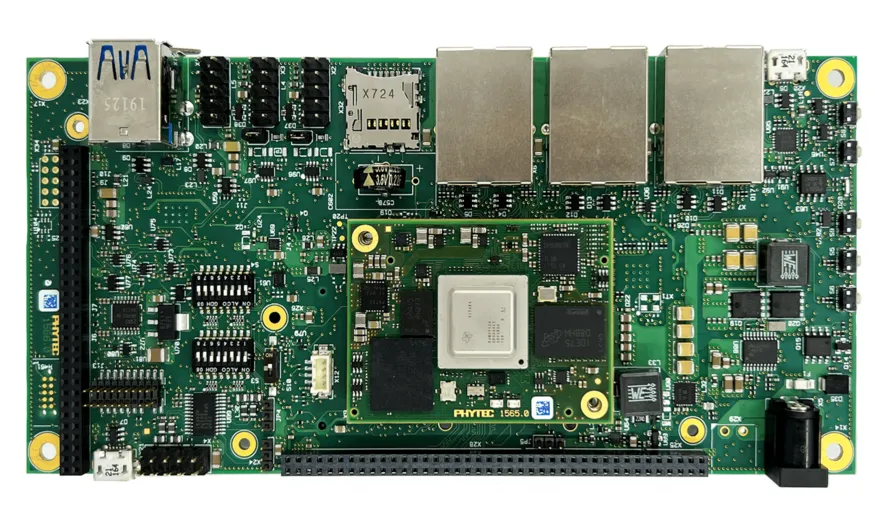
하드웨어
AM64x phyBOARD-Electra kit의 AM64x SoC는 MAIN domain의 dual Cortex-A53 cluster와 dual Cortex-R5F core 두 쌍, MCU domain의 single Cortex-M4 core로 구성됩니다. Zephyr는 M4F core에서 실행되도록 port되어 있으며 다음 자원을 사용합니다.
- Low-power Arm Cortex-M4F
- Memory: SRAM 256KB, DDR4 2GB
- Debug: XDS110 기반 JTAG
지원 기능
phyboard_electra/am6442/m4 구성은 다음 하드웨어 기능을 지원합니다.
| 인터페이스 | 컨트롤러 | 드라이버/컴포넌트 |
|---|---|---|
NVIC | on-chip | nested vector interrupt controller |
SYSTICK | on-chip | systick |
PINCTRL | on-chip | pinctrl |
UART | on-chip | serial |
GPIO | on-chip | gpio |
표에 없는 다른 하드웨어 기능은 현재 이 port에서 지원하지 않습니다.
장치
System clock
이 보드 구성의 system clock frequency는 400 MHz입니다.
DDR RAM
보드에는 2GB DDR RAM이 있지만 이 구성에서 Zephyr가 할당하는 RAM은 resource table 전용 4kB뿐이며, 주소 범위는 0xa4100000부터 0xa4100400까지입니다.
Serial port
MCU domain UART인 MCU_UART0 하나를 serial communication channel로 사용합니다.
GPIO
phyCORE-AM64x에는 gpio6에 연결된 heartbeat LED가 있습니다. 이 LED는 basic/blinky sample을 build하고 실행하도록 구성되어 있습니다.
SD 카드
PHYTEC 공식 WIC와 BMAP을 내려받아 etching software로 WIC image를 SD card에 기록합니다. 이 카드로 SoM의 A53 application core에서 Linux를 부팅하고, A53 core가 remoteproc를 사용해 M4 core에 Zephyr binary를 적재합니다.
기본 구성은 boards/phytec/phyboard_electra/phyboard_electra_am6442_m4_defconfig에 있습니다.
플래시
A53에서 실행되는 Linux가 remoteproc framework로 M4F coprocessor를 관리합니다. 따라서 시험할 binary를 SD card에 복사해 두어야 A53 core가 부팅 중에 이를 적재할 수 있습니다. 먼저 hello_world sample을 build합니다.
# Zephyr 저장소 루트에서
west build -b phyboard_electra/am6442/m4 samples/hello_world
결과 ELF는 build/zephyr/zephyr.elf에 생성됩니다. 이를 SD card의 /lib/firmware에 am64-mcu-m4f0_0-fw라는 이름으로 복사합니다.
# 예: SD card를 sdcard에 mount
sudo mount /dev/sdX sdcard
# ELF를 /lib/firmware에 복사
sudo cp --remove-destination zephyr.elf sdcard/lib/firmware/am64-mcu-m4f0_0-fw
이제 SD card로 부팅하면 M4F core에 binary가 올라갑니다. Boot pin을 SD Card boot mode로 설정하는 방법은 phyBOARD SD Card Booting Essentials를 따릅니다. Linux가 부팅되면 binary가 실행되고 MCU_UART0에 Hello world를 출력합니다.
Source
출처
영어 원문에는 문단, 문서 지시문, 표, 코드, 코드 심벌, 경로를 그대로 보존했습니다.