Part 1
요약·해설
RM1xx DVK는 BLE와 LoRa를 통합하며 RM191은 915MHz, RM186은 868MHz LoRa range를 사용합니다.
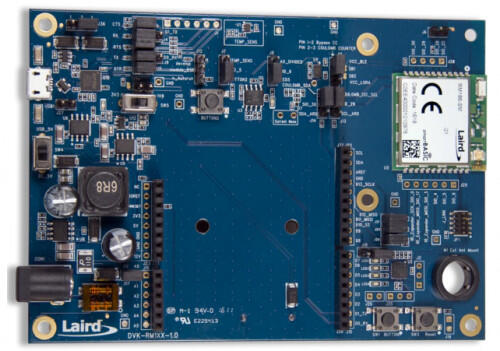
nRF51822 Cortex-M0
SX1272 · 915/868MHz
512KB SPI EEPROM
Part 2
접을 수 있는 영어 원문 전체
영어 원문 전체 펼치기
51A75E07A03FE8B69B2C0A639726C1095BC96E9C90E3E15F01E5B4C3F104AA2F
.. _rm1xx_dvk:

Ezurio RM1xx DVK
################

Overview
********

Ezurio's RM1xx is a module which integrates both LoRa and
BLE communications, powered by a Nordic Semiconductor nRF51822 ARM
Cortex-M0 CPU and on-board Semtech SX1272 LoRa RF chip. This board
supports the RM1xx on the RM1xx development board - RM191 for the
915MHz version and RM186 for the 868MHz version.

This development kit has the following features:

* :abbr:`ADC (Analog to Digital Converter)`
* CLOCK
* FLASH
* :abbr:`GPIO (General Purpose Input Output)`
* :abbr:`I2C (Inter-Integrated Circuit)`
* :abbr:`NVIC (Nested Vectored Interrupt Controller)`
* :abbr:`PWM (Pulse Width Modulation)`
* RADIO (Bluetooth Low Energy)
* :abbr:`RTC (nRF RTC System Clock)`
* Segger RTT (RTT Console)
* :abbr:`SPI (Serial Peripheral Interface)`
* :abbr:`UART (Universal asynchronous receiver-transmitter)`
* :abbr:`WDT (Watchdog Timer)`

.. figure:: ../../../../../../../boards/ezurio/rm1xx_dvk/doc/img/RM186-DVK.jpg
     :align: center
     :alt: RM1xx development kit (DVK)

     RM1xx development kit (DVK) (Credit: Ezurio)

.. figure:: ../../../../../../../boards/ezurio/rm1xx_dvk/doc/img/RM186-SM.jpg
     :align: center
     :alt: RM1xx module

     RM1xx module (Credit: Ezurio)

More information about the module can be found on the
`RM1xx homepage`_.

The `Nordic Semiconductor Infocenter`_
contains the processor's information and the datasheet.

Hardware
********

The RM1xx has two internal oscillators. The frequency of
the slow clock is 32.768KHz. The frequency of the main clock
is 16MHz.


Supported Features
==================

The rm1xx_dvk board configuration supports the following
hardware features:

+-----------+------------+----------------------+
| Interface | Controller | Driver/Component     |
+===========+============+======================+
| ADC       | on-chip    | adc                  |
+-----------+------------+----------------------+
| CLOCK     | on-chip    | clock_control        |
+-----------+------------+----------------------+
| FLASH     | on-chip    | flash                |
+-----------+------------+----------------------+
| GPIO      | on-chip    | gpio                 |
+-----------+------------+----------------------+
| I2C(M)    | on-chip    | i2c                  |
+-----------+------------+----------------------+
| NVIC      | on-chip    | arch/arm             |
+-----------+------------+----------------------+
| PWM       | on-chip    | pwm                  |
+-----------+------------+----------------------+
| RTC       | on-chip    | system clock         |
+-----------+------------+----------------------+
| RTT       | Segger     | console              |
+-----------+------------+----------------------+
| SPI(M/S)  | on-chip    | spi                  |
+-----------+------------+----------------------+
| SPU       | on-chip    | system protection    |
+-----------+------------+----------------------+
| UART      | on-chip    | serial               |
+-----------+------------+----------------------+
| WDT       | on-chip    | watchdog             |
+-----------+------------+----------------------+

Other hardware features have not been enabled yet for this board.
See `Nordic Semiconductor Infocenter`_
for a complete list of hardware features.

Connections and IOs
===================

The development board features a Microchip MCP23S08 SPI port expander -
note that this is not currently supported in Zephyr.

Refer to the `Microchip MCP23S08 datasheet`_ for further details.

Push buttons
------------

* BUTTON2 = SW0 = P0.05


Internal Memory
===============

EEPROM Memory
-------------

A 512KB (4Mb) Adesto AT25DF041B EEPROM is available via SPI for storage
of infrequently updated data and small datasets and can be used with
the spi-nor driver. Note that the EEPROM shares the same SPI bus as the
SX1272 LoRa transceiver so priority access should be given to the LoRa
radio.

Refer to the `Adesto AT25DF041B datasheet`_ for further details.

LoRa
====

A Semtech SX1272 transceiver chip is present in the module which can be
used in 915MHz LoRa frequency ranges if using an RM191 module or 868MHz
LoRa frequency ranges if uses an RM186 module

Refer to the `Semtech SX1272 datasheet`_ for further details.

Programming and Debugging
*************************

Flashing
========

Follow the instructions in the :ref:`nordic_segger` page to install
and configure all the necessary software. Further information can be
found in :ref:`nordic_segger_flashing`. Then build and flash
applications as usual (see :ref:`build_an_application` and
:ref:`application_run` for more details).

Here is an example for the :ref:`hello_world` application.

First, run your favorite terminal program to listen for output.

.. code-block:: console

   $ minicom -D <tty_device> -b 115200

Replace :code:`<tty_device>` with the port where the board nRF51 DK
can be found. For example, under Linux, :code:`/dev/ttyACM0`.

Then build and flash the application in the usual way.

.. zephyr-app-commands::
   :zephyr-app: samples/hello_world
   :board: rm1xx_dvk
   :goals: build flash

Debugging
=========

Refer to the :ref:`nordic_segger` page to learn about debugging boards
with a Segger IC.

References
**********

.. target-notes::

.. _RM1xx homepage: https://www.ezurio.com/wireless-modules/lorawan-solutions/sentrius-rm1xx-lora-ble-module
.. _Nordic Semiconductor Infocenter: https://infocenter.nordicsemi.com
.. _Adesto AT25DF041B datasheet: https://www.dialog-semiconductor.com/sites/default/files/ds-at25df041b_040.pdf
.. _Semtech SX1272 datasheet: https://semtech.my.salesforce.com/sfc/p/#E0000000JelG/a/440000001NCE/v_VBhk1IolDgxwwnOpcS_vTFxPfSEPQbuneK3mWsXlU
.. _Microchip MCP23S08 datasheet: https://ww1.microchip.com/downloads/en/DeviceDoc/MCP23008-MCP23S08-Data-Sheet-20001919F.pdf
Part 3
한국어 전문 번역
개요
Ezurio RM1xx는 LoRa와 BLE 통신을 모두 통합한 module로 Nordic Semiconductor nRF51822 ARM Cortex-M0 CPU와 onboard Semtech SX1272 LoRa RF chip을 사용합니다. 이 board는 RM1xx development board의 RM1xx를 지원하며 915MHz version은 RM191, 868MHz version은 RM186입니다.
이 development kit에는 다음 기능이 있습니다.
- ADC(Analog-to-Digital Converter)
- CLOCK
- FLASH
- GPIO(General Purpose Input/Output)
- I2C(Inter-Integrated Circuit)
- NVIC(Nested Vectored Interrupt Controller)
- PWM(Pulse Width Modulation)
- RADIO(Bluetooth Low Energy)
- RTC(nRF RTC System Clock)
- Segger RTT(RTT Console)
- SPI(Serial Peripheral Interface)
- UART(Universal asynchronous receiver-transmitter)
- WDT(Watchdog Timer)
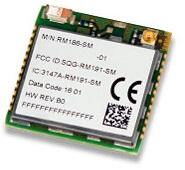
Module 정보는 RM1xx homepage에서 확인할 수 있습니다.
Nordic Semiconductor Infocenter에는 processor 정보와 datasheet가 있습니다.
Hardware
RM1xx에는 internal oscillator가 두 개 있습니다. Slow clock은 32.768kHz, main clock은 16MHz입니다.
지원 기능
rm1xx_dvk board configuration은 다음 hardware 기능을 지원합니다.
| Interface | Controller | Driver/Component |
|---|---|---|
| ADC | on-chip | adc |
| CLOCK | on-chip | clock_control |
| FLASH | on-chip | flash |
| GPIO | on-chip | gpio |
| I2C(M) | on-chip | i2c |
| NVIC | on-chip | arch/arm |
| PWM | on-chip | pwm |
| RTC | on-chip | system clock |
| RTT | Segger | console |
| SPI(M/S) | on-chip | spi |
| SPU | on-chip | system protection |
| UART | on-chip | serial |
| WDT | on-chip | watchdog |
그 밖의 hardware 기능은 아직 이 board에서 활성화되지 않았습니다. 전체 hardware 기능 목록은 Nordic Semiconductor Infocenter를 참조하십시오.
연결과 I/O
Development board에는 Microchip MCP23S08 SPI port expander가 있지만 현재 Zephyr에서는 지원하지 않습니다.
자세한 내용은 Microchip MCP23S08 datasheet를 참조하십시오.
Push button
- BUTTON2 = SW0 = P0.05
Internal Memory
EEPROM Memory
자주 갱신하지 않는 data와 small dataset 저장을 위한 512KB(4Mb) Adesto AT25DF041B EEPROM을 SPI로 사용할 수 있으며 spi-nor driver와 함께 쓸 수 있습니다. EEPROM은 SX1272 LoRa transceiver와 동일한 SPI bus를 공유하므로 LoRa radio에 우선 접근권을 부여해야 합니다.
자세한 내용은 Adesto AT25DF041B datasheet를 참조하십시오.
LoRa
Module에는 Semtech SX1272 transceiver chip이 있습니다. RM191 module에서는 915MHz LoRa frequency range, RM186 module에서는 868MHz LoRa frequency range를 사용할 수 있습니다.
자세한 내용은 Semtech SX1272 datasheet를 참조하십시오.
Programming과 Debugging
Flashing
Nordic Segger 안내에 따라 필요한 software를 설치·구성한 뒤 일반적인 방법으로 application을 build하고 flash합니다.
다음은 hello_world application 예입니다. 먼저 terminal program으로 output을 수신합니다.
$ minicom -D <tty_device> -b 115200<tty_device>를 nRF51 DK board가 연결된 port로 바꿉니다. Linux 예시는 /dev/ttyACM0입니다.
그다음 일반적인 방법으로 application을 build하고 flash합니다.
west build -b rm1xx_dvk samples/hello_world
west flash
Debugging
Segger IC를 사용하는 board의 debugging 방법은 Nordic Segger 안내를 참조하십시오.
참고 자료
Source
출처
영어 원문에는 문단, 문서 지시문, 표, 코드, 코드 심벌, 경로를 그대로 보존했습니다.